
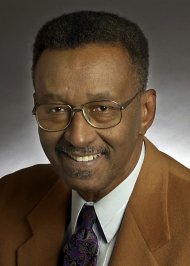
Excerpt:
Imagine you are an unborn spirit whom God has condemned to a life of poverty but has permitted to choose the nation in which to live. I’m betting that most any such condemned unborn spirit would choose the United States. Why? What has historically been defined as poverty, nationally or internationally, no longer exists in the U.S. Let’s look at it.
And here’s what he finds:
— Forty-three percent of all poor households actually own their own homes. The average home owned by persons classified as poor by the Census Bureau is a three-bedroom house with one-and-a-half baths, a garage and a porch or patio.
— Eighty percent of poor households have air conditioning. By contrast, in 1970, only 36 percent of the entire U.S. population enjoyed air conditioning.
— The typical poor American has more living space than the average individual living in Paris, London, Vienna, Athens and other cities throughout Europe. (These comparisons are to the average citizens in foreign countries, not to those classified as poor.)
— Nearly three-quarters of poor households own a car; 31 percent own two or more cars.
— Ninety-seven percent of poor households have a color television; over half own two or more color televisions.
— Seventy-eight percent have a VCR or DVD player; 62 percent have cable or satellite TV reception.
— Eighty-nine percent own microwave ovens, more than half have a stereo, and a more than a third have an automatic dishwasher.
And he concludes:
Yesterday’s material poverty is all but gone. In all too many cases, it has been replaced by a more debilitating kind of poverty — behavioral poverty or poverty of the spirit. This kind of poverty refers to conduct and values that prevent the development of healthy families, work ethic and self-sufficiency. The absence of these values virtually guarantees pathological lifestyles that include: drug and alcohol addiction, crime, violence, incarceration, illegitimacy, single-parent households, dependency and erosion of work ethic. Poverty of the spirit is a direct result of the perverse incentives created by some of our efforts to address material poverty.
Instead of exporting foreign aid to poor nations, we should be investing and trading with them to encourage them to start businesses and hire people. We should also be exporting our Judeo-Chrsitian values and our economic/political views, e.g. – private property, capitalism, the Constitution, federalism,the rule of law, etc. Knowledge and good character are solutions to the problem of poverty – not wealth redistribution.
Walter Williams is my #2 favorite economist.
 WINTERY KNIGHT
The third-world’s definition of not-poor is anyone with two pairs of shoes.
TV, cable, is out of the question. Car? Fuggedaboudit. House? Yakiddinme?
In Canada, everyone has access to “free” healthcare. That makes the poorest Canadian richer than half the humans on the planet.
The one incongruity I have seen in the third world is that everyone has a cell phone. Many countries have a system where only the outgoing party pays for the call. I have seen whole groups of African leaders each with a phone, all pleading they have no “talk time” on it. A typical call from an African consists of “call me- bye!” and a hang-up.
The cell phone is the poor man’s car, TV, cable, expensive watch all rolled into one. And, although it might be an irrational expense — especially a “loaded” one, I don’t begrudge them it.
LikeLike
Hi Richard. I live in Africa and I see what you’re referring to re the cellphones. You need to remember that landlines are often unreliable because of poor infrastructure, so when people need basic communications they rely on cellphones. There’s no guarantee of there being a nearby working payphone. Even in a country with better infrastructure a cellphone is often an invaluable business tool. Several guys will often share a cellphone and use it for business purposes. Migrant workers need one to keep in contact with family and to do cellphone banking (often sending money back home). A cheap, basic cellphone can be bought for 200 ZAR and becomes a worthwhile investment. It’s certainly not irrational or incongruous when you think about it.
LikeLike
“Imagine you are an unborn spirit whom God has condemned to a life of poverty but has permitted to choose the nation in which to live.”
Before I condemn this for being a bogus premise for a discussion (and unwittingly denigrate anyone’s beliefs), I’d be interested to know: do a lot of people believe here God either creates poverty or condemns unborn souls to it? Or born ones?
LikeLike
Wintery, I don’t quite see your logic. “We should also be exporting our Judeo-Christian values”. This statement implies that the US shows more evidence of Judeo-Christian values than Africa. But Williams has just pointed out the spiritual poverty. It seems that that is precisely the area where the US is least equipped to help other countries. Also, a lot of African countries have Judeo-Christian values to a far greater extent than the US. There are more Anglicans in Africa than in the UK and the USA combined. Also, African Anglicanism tends to be more conservative and evangelical, less nominal. The split in the Anglican church has highlighted this. The liberals get together at the Lambeth conference and the conservatives get together at GAFCON. Many are now asking for Africa to send missionaries to Europe and the US. The centre of Christianity is no longer the western world. It is the “global south”. Christianity is growing fastest in Africa. Also, the church in the West is possibly the most syncretistic and it is often hard for those of a western mindset to see where values they assume to be Christian are actually merely cultural and not Christian at all. Africa has its own syncretistic challenges from animism, but at least it’s easier to see when it happens. In the West it’s almost invisible because one is so accustomed to it.
You may find this link interesting: http://www.calvin.edu/news/2004-05/changing_face.htm
I would say that while the US may be materially wealthy it needs to recover it’s spiritual wealth. In many ways, I would far rather be poor in Africa than in the US. There seems to be a greater spiritual poverty in America – and that’s far more grievous an ill than material poverty.
LikeLike
Well, I was thinking more about things like corruption, bribes, etc. You know how that hurts the economy in places like India and Mexico?
LikeLike
Yes, and in Africa too.
LikeLike
Oops. Serious typo on my part. My comment above should read… far MORE grievous an ill than material poverty.
LikeLike
Fixed. I like your new picture.
LikeLike
Thanks for the fix. Yeah, I like it too. :) Man, I want to reply to your lobsterous comments on the other post, but my cellphone’s memory can’t handle it. It’s too big a post! Oh well, you’ll have to wait. “Just you wait, Henry Higgins, just you wait!”
LikeLike
Nooo! Be nice! Don’t beat me up too badly – I’ll just make the changes in the post that you want instead. My normal editor has been busy so all my posts are horrible, but she’s back now and she’ll be able to restrain my excesses.
LikeLike