
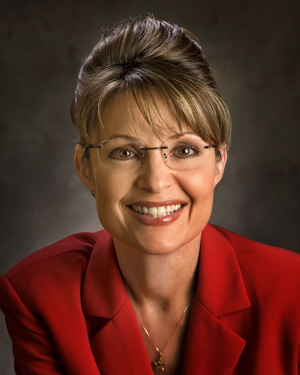
Story here at the libertarian Cato Institute. (H/T Caffeinated Thoughts health care round-up)
Excerpt:
What Palin wrote about death panels clearly had nothing to do with counseling or with any other specifics in seminal House bill. What she wrote was: “Government health care will not reduce the cost; it will simply refuse to pay the cost. And who will suffer the most when they ration care? The sick, the elderly, and the disabled, of course.”
How could anyone believe Palin’s sensible comment about rationing was, in reality, a senseless fear of counseling? To say so was no mistake; it was an oft-repeated big lie.
Rather than even mentioning the House bill, Palin linked to an interesting speech by “Rep. Michele Bachmann [which] highlighted the Orwellian thinking of the president’s health care advisor, Dr. Ezekiel Emanuel, the brother of the White House chief of staff.”
[…]Pending health care bills would make such government-mandated scarcity of health care much worse. There would be massive shifting of money away from Medicare toward Medicaid. But the extra Medicaid money would be spread around more thinly. States would cut benefits to the poor in order to accommodate millions of new, less-poor people lured into Medicaid, at least half of whom (7 or 8 million by my estimate) currently have employer-provided health insurance.
The Senate health bill supposedly intends to slash Medicare payment rates for physicians by 21% next year and more in future years, with permanent reductions in payments to other medical services too. It would also establish an Independent Payment Advisory Board which would be empowered to make deeper cuts which Congress could reject only with considerable difficulty. If that’s not quite a “death panel” it would surely not be pro-life in its impact.
The Congressional Budget Office says, “It is unclear whether such a reduction in the growth rate could be achieved, and if so, whether it would . . . reduce access to care or diminish the quality of care.”
Actually, it’s clear enough that the proposed Medicare cuts won’t be achieved, but that efforts in that direction will nonetheless reduce access to care and diminish its quality. The government can’t boost demand and cut prices without creating excess demand. And that, in turn, means rationing by longer waiting lines and by panels (rationing boards) making life-or death decisions for other people.
The Cato Institute says that Sarah Palin is right, and I agree. She is the one who understands the economics of supply and demand – her critics are ignorant of the facts.
 WINTERY KNIGHT
There’s no reason to believe there would be “death panels.” As you know my wife works at a hospital that accepts the government insurance plans medicaid/medicare and those people get some of the best care because the doctors can order any test without fear of penalizing the patients (financially); some might wonder why medicaid/medicare patients often have some of the worst outcomes – it’s not because of the care they receive, in my opinion it’s because they are often uneducated, don’t stick to the medicine/medical routines prescribed by the doctors, frequently let themselves run out of meds, and are just overly poor at following the doctors directions, regardless of how simple they are. If you continue the same routines that brought you to the hospital after leaving, you can’t expect different results…
I do agree with the statement that cuts wouldn’t be pro-life, but to claim that as death panels is ludicrous at best, more likely scare mongering.
disclaimer: I fully disagree with the bill being put forth – I think it’s too large and too expensive and I believe simpler legislation that addresses the problems with the current system would be a much better starting point
LikeLike
One of the big claims by supporters of this type of bill is that there are thousands who die each day/month/year (whatever) due to a lack of insurance. This is every bit the hyperbole that “death panels” is, with the exception that though there would be no “death panel” as such, there is indeed a body that would deal with when spending will be done with regards to the patient’s likely chance of survival weighed against available resources. Without the name “death panel”, the result is the same: people being allowed to die rather than being given every possible chance to live because of costs. Sounds like a death panel to me.
LikeLike
but in your own argument you talk about people dying every day/month/year from lack of insurance (I know, I did slightly twist it) – isn’t this a societal “death panel” – you don’t have the money to pay so society says they won’t provide this service for you? And before you counter, you can go into an emergency room, but things like cancer aren’t considered emergencies…my wife has seen approximately 2 kids this year that were sent home (and later died) because they didn’t have insurance and couldn’t start treatment (she said one would have most likely died anyways, but the other had a good chance). Either way you cut it, people are going to die because of a lack of (decent) insurance. I’m still opposed to this bill, but those who are actively opposing it with bogus arguments like death panels are doing no one a service. A much better approach would be to point out the problems with the current system (and there are MANY) and attempt to fix them instead of throwing the baby out with the bath water and attempting to reinvent the entire wheel.
LikeLike