Tag Archives: Defense Spending

Top ten foreign policy and national security issues for 2012

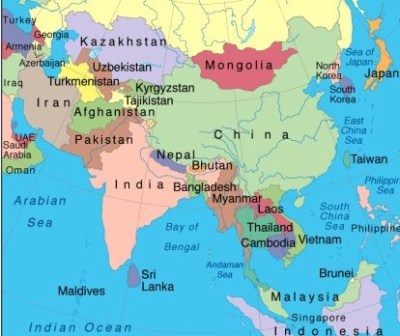
Map of Asia
Map of Asia

From the American Enterprise Institute.

Here’s the list:

  1. Iran, and the American retreat from Iraq
  2. Dealing with Islam and China in South Asia
  3. America’s strategy for Pakistan
  4. Defense spending priorities
  5. American support for Israel
  6. The Islamization of Turkey
  7. Collapse of the European economies
  8. Demographic crisis in Europe
  9. Demographic crisis in Russia
  10. Strategy for the Middle East

They have one article linked for each topic, so I chose the Islamization of Turkey.

Full text:

Turkey was a key American ally throughout the Cold War. As one of only two NATO countries to share a border with the Soviet Union, Turkey proved pivotal not only to the defense of Europe but also for American interests in Asia. The Turkish army fought alongside U.S. troops in Korea. Americans embraced Turkey not only for its strategic role, but also for its values. The Turkish government was decidedly Western-leaning. Turkey may have been majority Muslim, but most Turks saw their future tied more to the West than the Middle East.

Over the past nine years, however, Turkey has changed. No longer can Turkey be called a democracy. The Pew Global Attitudes Project now ranks Turkey as the most anti-American country it surveys. Reporters Without Frontiers ranks Turkish press freedom below even Zimbabwe and Venezuela. Turkey has imprisoned more journalists than even China and Iran. As Prime Minister Recep Tayyip Erdoğan has sought to Islamize society, Turkish women have lost both their equality and safety: The murder rate of women has increased 1,400 percent since Erdoğan’s Justice and Development Party took power.

Erdoğan has reoriented Turkey’s foreign policy as well. Turkey now not only embraces the Arab world, but it allies itself with its more radical factions: Turkey endorses Hamas, Hezbollah, Sudan’s genocidal dictator Omar al-Bashir, and the Islamic Republic of Iran. Whereas a decade ago, the alliance between Turkey and Israel stabilized the Eastern Mediterranean, today diplomats worry that Turkey’s antagonism toward both Israel and Cyprus could lead to military conflict in the region. In September 2010, Turkey raised eyebrows at the Pentagon when it held secret war games with the Chinese air force without first alerting Washington. Because Turkey increasingly is the obstacle to NATO consensus, its future in the defensive alliance may now be open to question.

Any new president will be faced with serious decisions regarding Turkey. Should Turkey remain in NATO? If so, should the United States share its next generation F-35 Joint Strike Fighters, Predators, and AWACS aircraft with Turkey? Lastly, if Erdoğan fulfills his promise to use the Turkish navy to challenge Israel’s blockade of Gaza, leading to a fight between two traditional American allies, on whose side will the White House be, and what actions would the new president take?

This is a primer, so the articles are fairly short. Just enough to give you background information on the hot spots that the next President will have to deal with. Can you think of any issues they left out? I think that we should also be concerned with the drug cartels in Mexico, the continuous sabre-rattling from Venezuela, threats to our Asian allies from China, and whether we still need to have so many troops in Europe and South Korea.

It’s good for Christians to have some awareness of national security and foreign policy issues. It only takes an hour to read a few articles and to have some understanding of the issues we are facing, so that we can discuss them with others and vote properly. There’s going to be a foreign policy debate for the GOP primary on November 22, 2011, so it would be good for us to study up so we can understand what they are talking about.

What is the doctrine of peace through strength?

Ronald Reagan
Ronald Reagan

Image stolen from Douglas Groothuis.

“Si vis pacem, para bellum”
– Publius Flavius Vegetius Renatus

It means, “Let him who desires peace prepare for war.”

The idea of peace through strength was paraphrased in George Washington’s first state of the union address, as well as by Presidents Lincoln and Reagan. Margaret Thatcher (United Kingdom) and Stephen Harper (Canada) also believe in peace through strength.

Most wars start when a dictator or monarch (e.g. – Hitler) believes he can win a conflict against a weak neighbor quickly and easily. Perhaps to test out his plan, he takes some small aggressive steps to make sure that no one is going to stop his aggression (e.g. – rebuilding the Luftwaffe, occupying the Rhineland, annexing the Sudetenland, annexing Austria, invading Poland). Once he is able to confirm over and over that no democracies are going to stop his conquests by force, he attacks.

The way to stop most wars is to make dictators believe that you have the means and the will to stop their aggression. Clinton allowed about a half dozen attacks in the 90s without any reprisal, (e.g. – World Trade Center, USS Cole, etc.) We did not respond to these terrorist attacks on our national interests. As a result, Bin Laden would joke about how the USA was a “paper tiger” that did not have the stomach for war. He thought that a few American losses would make us pack up and go home.

Contrast Clinton’s view with Ronald Reagan. Reagan’s biography at the White House web site says this:

“In foreign policy, Reagan sought to achieve “peace through strength“. During his two terms he increased defense spending 35 percent, but sought to improve relations with the Soviet Union. In dramatic meetings with Soviet leader Mikhail Gorbachev, he negotiated a treaty that would eliminate intermediate-range nuclear missiles. Reagan declared war against international terrorism, sending American bombers against Libya after evidence came out that Libya was involved in an attack on American soldiers in a West Berlin nightclub.”

When the USA was attacked by terrorists, Bush, following Reagan’s example, made sure that the aggressors would understand that the first steps of aggression would draw a violent, decisive response. As a result of the Bush doctrine, Libya has discontinued its WMD program and invited inspectors to come in and cart away all of its research equipment. Libya did this only because it believed that the USA was willing to back up diplomacy with force. We can have peace if we cause aggressors to believe that war will cost too much.

Now, violence is not the only way to make war cost too much. We could probably avoid war with Iran or Venezuela or Russia by drilling for our own oil and building our own nuclear plants. No one prefers a war. It’s better to de-fund potential aggressors by supplying our economy with oil that we produce ourselves. This is one good reason to increase domestic energy production. (Another good reason is to lower the price of oil, etc – because of supply and demand: increased supply leads to lower prices)

Reagan won the cold war without firing a shot. But sometimes, especially after 8 years of Clinton’s weak foreign policy, some violence is needed to communicate to our enemies that we mean business. Our  willingness to engage in a military response to the 9/11 attacks was enough to provide us with 7 years free of attacks on American soil. The terrorists knew that next time they attacked us, then maybe Syria would become a democracy. So there were no more attacks on American soil while Bush governed.

Deterrence works. The goal is to AVOID war by making tyrants understand that the cost of their aggression will be too much for them to bear. This is the doctrine of peace through strength.

“An appeaser is one who feeds a crocodile – hoping it will eat him last.”
— Winston Churchill